
Why Farm-Rooted Enrichment™
Why Farm-Rooted Enrichment™?
A hands-on approach that connects science, nature, food, creativity, and practical life.
Our Approach
Farm-Rooted Enrichment™ is the teaching approach behind The Web of Life.
It grew from years of watching children learn at Young Pioneers on our working family farm.
We noticed that children became completely engaged when they were given something real to do. They wanted to understand the science behind bread because they were making it. They wanted to know how plants grow because they had placed the seeds in the soil. They became curious about insects, birds, weather, and habitats because they were outside observing them.
Learning stopped feeling like a list of separate subjects and became part of everyday life.
That is what Farm-Rooted Enrichment means to us.
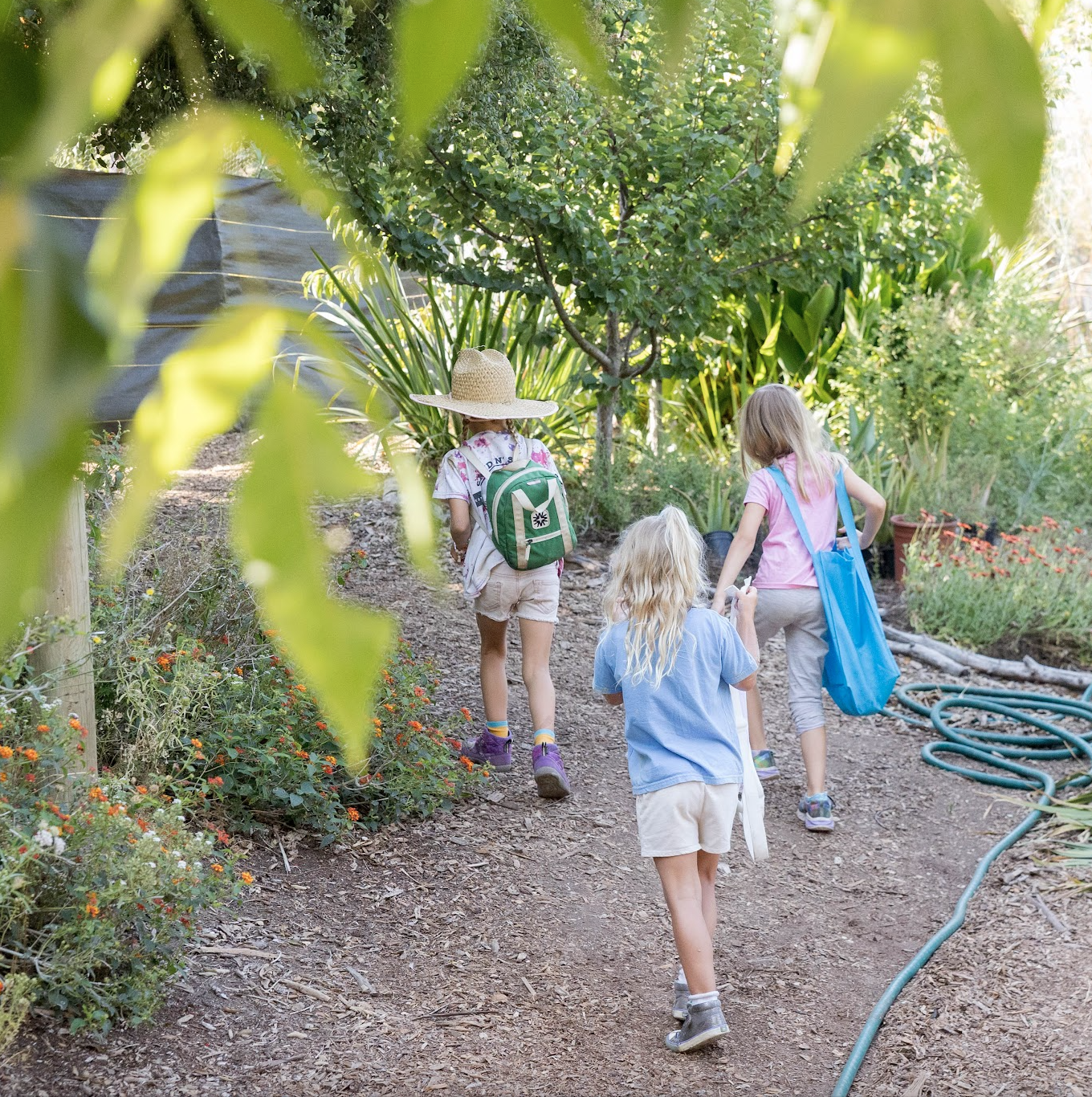
[PHOTO: Children participating in a hands-on farm lesson]
We Didn’t Set Out to Create a Teaching Philosophy
When we started Young Pioneers, we were not trying to create the next educational philosophy.
We simply wanted children to fall in love with learning.
We invited children onto our farm to plant seeds, harvest vegetables, prepare food, conduct experiments, build projects, explore habitats, and discover the world around them.
Then we began noticing something.
Children who struggled to sit still became completely focused when they were building or working in the garden.
Reluctant readers willingly followed a recipe because they wanted to make the food.
Children asked better questions because they were experiencing the lesson instead of only hearing about it.
Parents began telling us that their children would not stop talking about the farm.
As Young Pioneers grew, parents started asking how they could bring this kind of learning home.
That question eventually became The Web of Life.
Learning Through Real Experiences
Children learn about the world by being part of it.
Instead of only reading about a seed, they plant one.
Instead of only looking at a food chain on a page, they explore a garden or pond and discover which living things depend on one another.
Instead of only reading about chemical reactions, they watch dough rise, create an experiment, or observe what happens when ingredients are combined.
Books and background information are still important, but the hands-on experience gives children a reason to care about what they are learning.
It makes the lesson real.
Everything Is Connected
In real life, learning does not stay inside separate subject boxes.
A garden lesson can include plant science, weather, insects, nutrition, measuring, observation, and responsibility.
A kitchen lesson can include chemistry, fractions, reading, history, culture, sequencing, and practical life skills.
A nature lesson can include biology, drawing, journaling, geography, vocabulary, and careful observation.
We do not need to force every subject into every activity. We simply help children notice the connections that are already there.
When learning is connected to something children can see, touch, make, grow, or taste, it becomes easier to understand and much harder to forget.
That is why we named the curriculum The Web of Life.
[PHOTO: Child gardening, cooking, or conducting an experiment]
The Seven Principles of Farm-Rooted Enrichment™
Nature Is a Classroom
Children need opportunities to slow down, look closely, and notice what is happening around them.
A backyard, patio, park, garden, hiking trail, kitchen, or even a few pots by the front door can become a place to learn.
You do not need to live on a farm. You simply need a place to begin noticing.
Children Learn with Their Hands
Children build confidence when they are trusted to participate in real work.
They can plant, cook, measure, build, observe, create, experiment, and safely use real tools with proper instruction.
They are not just learning about something. They are experiencing it for themselves.
Curiosity Comes Before Having Every Answer
We want children to ask questions.
What do you notice?
Why do you think that happened?
What might happen next?
How could we test that idea?
Parents do not need to know every answer before beginning a lesson. It is good for children to hear us say, “I don’t know. Let’s find out together.”
Subjects Belong Together
Science, history, art, cooking, gardening, reading, writing, and practical skills naturally overlap.
One experience can teach several subjects without making the lesson feel forced or complicated.
Children begin to see that what they are learning has a purpose outside of a textbook.
Families Can Learn Together
The Web of Life was created for families teaching children ages 5–10, including families teaching more than one age at a time.
Children can explore the same topic together while receiving different questions, responsibilities, and challenges based on their ages and abilities.
Parents should not have to prepare a completely different lesson for every child.
Practical Life Skills Matter
Growing food, preparing a meal, following directions, using tools, caring for living things, and completing a project are important parts of a child’s education.
These experiences help children develop responsibility, patience, confidence, problem-solving skills, and an understanding of what they are capable of doing.
Wonder Can Grow into Stewardship
When children slow down and notice the world around them, they begin to understand how much life is happening everywhere.
They see that healthy soil helps plants grow, insects help pollinate flowers, water must be used wisely, and the food on their table came from someone’s work.
When children understand these connections, they are more likely to value and care for them.
Rooted in Faith and Open to Families
Our Christian faith shapes our family, our farm, and the heart behind The Web of Life.
We want children to notice, love, and care for God’s creation. That purpose guides the work we do and the experiences we create.
The core Web of Life curriculum focuses on science, nature, gardening, cooking, homesteading, history, creativity, and practical life skills. It is designed so it can be used by faith-based families, secular homeschool families, charter-school families, co-ops, and other learning communities.
Families who want to add Scripture and faith-based conversations can also use our optional devotional resources.
This allows each family to use the hands-on lessons in a way that works for their home, their school requirements, and their beliefs.
How Does Farm-Rooted Enrichment Compare?
There are many wonderful ways to homeschool a child.
We are not trying to tell families that there is only one right way to teach. Most families take pieces from several different approaches and create something that works for their children.
Farm-Rooted Enrichment can come alongside the homeschool style you already use. You do not need to change everything you are doing or choose a new educational philosophy.
The comparisons below will help you understand what we share with other approaches and what makes The Web of Life different.
-
Charlotte Mason families value time outdoors, nature study, short lessons, careful observation, and real experiences over busywork.
We share many of those values.
The Web of Life encourages children to spend time outside, study the natural world, develop habits of observation, and learn through meaningful experiences instead of relying on worksheets.
The difference is that The Web of Life is not a complete Charlotte Mason education. We do not provide a full program built around living books, narration, copywork, or habit training.
Our curriculum is structured, hands-on enrichment that can work beautifully alongside the Charlotte Mason approach your family already uses.
What we share: Nature study, observation, short lessons, meaningful experiences, and respect for children.
How we are different: Web of Life provides preplanned, activity-based enrichment rather than a complete Charlotte Mason program.
-
Unit studies bring several subjects together around one topic.
This is very close to the way The Web of Life is structured.
A lesson about bread may include science, history, reading, measuring, nutrition, culture, and practical kitchen skills. A lesson about butterflies may include biology, habitats, vocabulary, observation, sketching, and nature journaling.
The Web of Life also makes it possible for several ages to study the same topic together.
The difference is that you do not have to build the unit yourself. We give you the background information, supply list, instructions, questions, and age adaptations.
What we share: Connected subjects, hands-on projects, and family-style learning.
How we are different: Web of Life gives parents complete, open-and-go lessons developed and tested through our farm program.
-
The Reggio Emilia approach sees children as curious, capable learners and values creativity, exploration, and the environment as part of the learning experience.
We agree that children should be taken seriously and given opportunities to ask questions, explore ideas, and express what they discover.
Our farm has taught us that the environment can be an incredible teacher. A garden, kitchen, pond, trail, or backyard gives children real things to observe and investigate.
The difference is that Reggio Emilia is usually led by the child’s emerging interests and does not rely on prewritten lessons. The Web of Life gives parents a structured lesson while still leaving room for children’s questions and discoveries.
What we share: Curiosity, creativity, careful observation, and an environment that encourages discovery.
How we are different: Web of Life provides prepared, parent-guided lessons instead of a fully child-directed, emergent curriculum.
-
Waldorf education is known for seasonal rhythms, storytelling, creativity, cooking, gardening, art, and handwork.
We share an appreciation for many of those experiences.
The Web of Life follows the seasons and includes opportunities for children to cook, garden, work with natural materials, create art, and practice traditional skills.
However, Web of Life is not based on Rudolf Steiner’s spiritual philosophy or the complete Waldorf educational model. Families can enjoy seasonal learning and handwork without adopting the beliefs or structure behind Waldorf education.
What we share: Seasonal learning, cooking, gardening, creativity, natural materials, and handwork.
How we are different: Web of Life is not based on anthroposophy or the Waldorf developmental sequence.
-
Montessori education respects children as capable people who can learn independence through meaningful, hands-on work.
We share the belief that children can do much more than we sometimes give them credit for.
The Web of Life gives children opportunities to prepare food, care for plants, use tools, complete projects, make choices, and take real responsibility.
The difference is that Montessori learning is generally self-directed and often uses a specially prepared environment with specific materials. Web of Life lessons are structured and guided by a parent or teacher, using supplies that families can usually find at home.
What we share: Practical life skills, independence, real materials, and respect for children’s abilities.
How we are different: Web of Life is parent-guided and does not require specialized Montessori materials or a prepared classroom.
-
Forest School values outdoor exploration, nature connection, supported risk-taking, and children learning through direct experience.
We share the belief that children need meaningful time outside.
The Web of Life encourages children to explore natural spaces, use tools safely, observe wildlife, study habitats, build projects, and become more confident outdoors.
A formal Forest School program is usually child-led, takes place regularly in a natural setting, and is guided by a trained practitioner. Web of Life is a prepared curriculum that parents and teachers can use at home, in a co-op, at a park, or in many other settings.
What we share: Outdoor experience, nature connection, confidence, real tools, and hands-on discovery.
How we are different: Web of Life is a structured curriculum for families and does not claim to be a formal Forest School program.
-
Classical Christian education is built around a Christian worldview and commonly uses the stages of grammar, logic, and rhetoric. It often includes great books, memorization, history, language, and formal academic study.
We share the belief that learning has purpose and that children should grow in truth, wonder, gratitude, and care for God’s creation.
The difference is in the structure. The Web of Life is not a complete classical curriculum. It does not follow the trivium or provide a full program in classical literature, languages, history, or theology.
It is hands-on enrichment that can add nature, science, gardening, cooking, and practical skills to a Classical Christian homeschool.
What we share: Faith, wonder, purposeful learning, and a desire for children to understand and care for creation.
How we are different: Web of Life provides hands-on enrichment rather than a complete classical academic program.
Where Does Farm-Rooted Enrichment Fit?
You may see your family in more than one of these approaches.
You may love Charlotte Mason nature study, Montessori practical skills, Waldorf handwork, Forest School exploration, unit-study connections, and the faith foundation of Classical Christian education.
You do not have to fit inside one box.
Farm-Rooted Enrichment brings many of these shared values together through lessons first developed with real children on a working farm.
Our approach is:
Hands-on
Parent-guided
Open-and-go
Multi-age
Connected across subjects
Rooted in real life
Flexible enough to use almost anywhere
You can keep the homeschool philosophy you already love and use The Web of Life to add meaningful experiences in science, nature, gardening, cooking, and practical life.
Tested with Real Children
The Web of Life was not created by guessing what children might enjoy.
Our lessons grew from years of teaching at Young Pioneers on Sand n Straw Community Farm.
We watched how children responded. We saw what held their attention, what confused them, what encouraged better questions, and what they continued talking about after class.
We revised and improved the lessons before adapting them for families to use at home.
Today, Young Pioneers serves close to 400 children each semester. Those children and their teachers have helped us understand what makes hands-on learning meaningful, manageable, and memorable.
[PHOTO: Young Pioneers children learning together]
Designed for Real Families
You do not need a farm.
You do not need a large garden.
You do not need expensive equipment.
You do not need to consider yourself outdoorsy.
You do not need to be a trained teacher, gardener, cook, or scientist.
We created The Web of Life for the parent who wants to give their children meaningful, hands-on experiences but does not have hours to build every lesson from scratch.
Each lesson provides the background information, supply list, instructions, discussion questions, and age adaptations you need to begin.
Some families use the curriculum in a backyard or garden. Others use a patio, kitchen table, local park, nature trail, or a few containers by the front door.
The location does not need to be perfect for learning to happen.
How It Fits into Your Homeschool
The Web of Life is an enrichment curriculum. It is not intended to replace your family’s core math or language arts program.
Families can use it for:
Hands-on science
Nature study
Gardening
Cooking and food education
Homesteading and practical skills
Art and creative projects
Family learning days
Friday enrichment
Homeschool co-ops
Seasonal learning
You can use the lessons in order, choose the topics that fit your season, or follow your child’s interests.
Some families complete one lesson each week. Others use several lessons during a project week or co-op gathering.
The curriculum is meant to support your homeschool, not make your schedule feel heavier.
Our Hope for Your Family
We hope The Web of Life helps learning feel less complicated and more connected to everyday life.
We hope it gives you the confidence to try something new with your children, even if you are learning alongside them.
Most of all, we hope your children begin to notice more.
We hope they notice the first new leaf on a plant, the insects working in the garden, the smell of bread baking, the change in the weather, and the work that went into growing their food.
When children begin to notice, they begin to wonder.
When they wonder, they want to learn.
And when they understand how everything works together, they begin to care for it.
Bring Farm-Rooted Learning into Your Home
See how The Web of Life can help your family bring science, nature, gardening, cooking, and practical skills into your homeschool.