
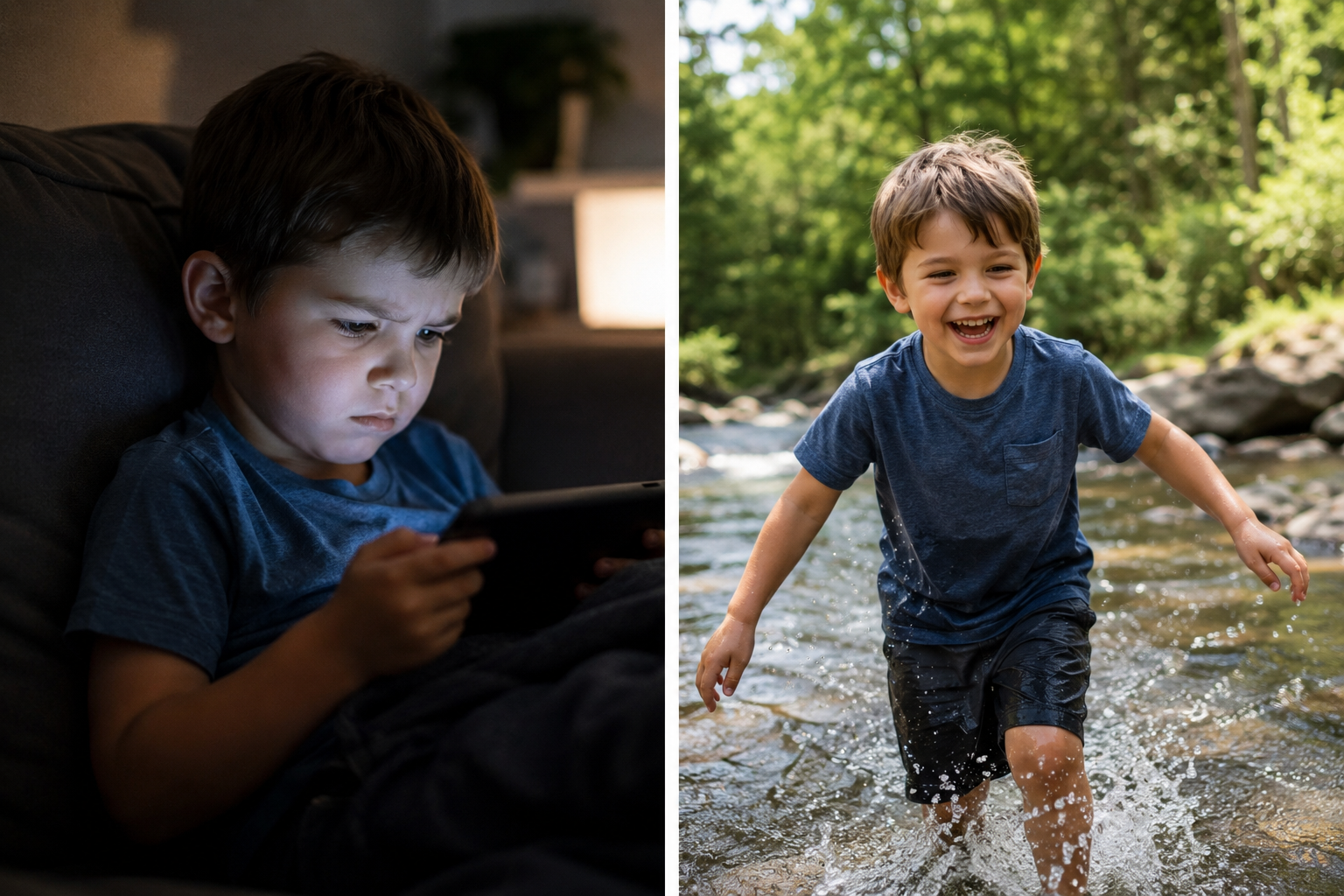
Screens can be exciting, fast, colorful, and easy to reach for. For many children, stepping away from a device and heading outside can feel difficult at first — not because they don’t love nature, but because nature asks them to slow down.
And slowing down is a skill.
At The Web of Life, we believe outdoor learning does not need to begin with a big hike, a perfect lesson plan, or a child who is already excited to go outside. Sometimes it begins with one small invitation:
“Let’s go see what your senses can discover.”
Why Nature Helps Children Reset
Nature gives children something screens often cannot: real texture, real movement, real mystery, and real discovery.
Outside, children are invited to use their whole bodies. They listen for birds, feel rough bark, notice shadows, smell soil after watering, and watch tiny creatures move through the grass. These experiences help children practice attention, patience, observation, and curiosity in a gentle, natural way.
Instead of simply being entertained, they become explorers.
A Simple Hands-On Activity: The Five-Senses Nature Scavenger Hunt
This activity is perfect for children who resist going outside because it feels like a game, not a lesson.
You don’t need anything fancy. A backyard, sidewalk, garden, park, or small patch of outdoor space is enough.
What You’ll Need
A small paper bag or basket
A pencil
A simple checklist
15–20 minutes outside
The Nature Challenge
Invite your child to find:
Something You Can See
Look for something colorful, tiny, moving, growing, shiny, or hidden.
Ask:
“What catches your eye first?”
Something You Can Hear
Pause quietly and listen.
Ask:
“Can you hear something close by? Can you hear something far away?”
Something You Can Touch
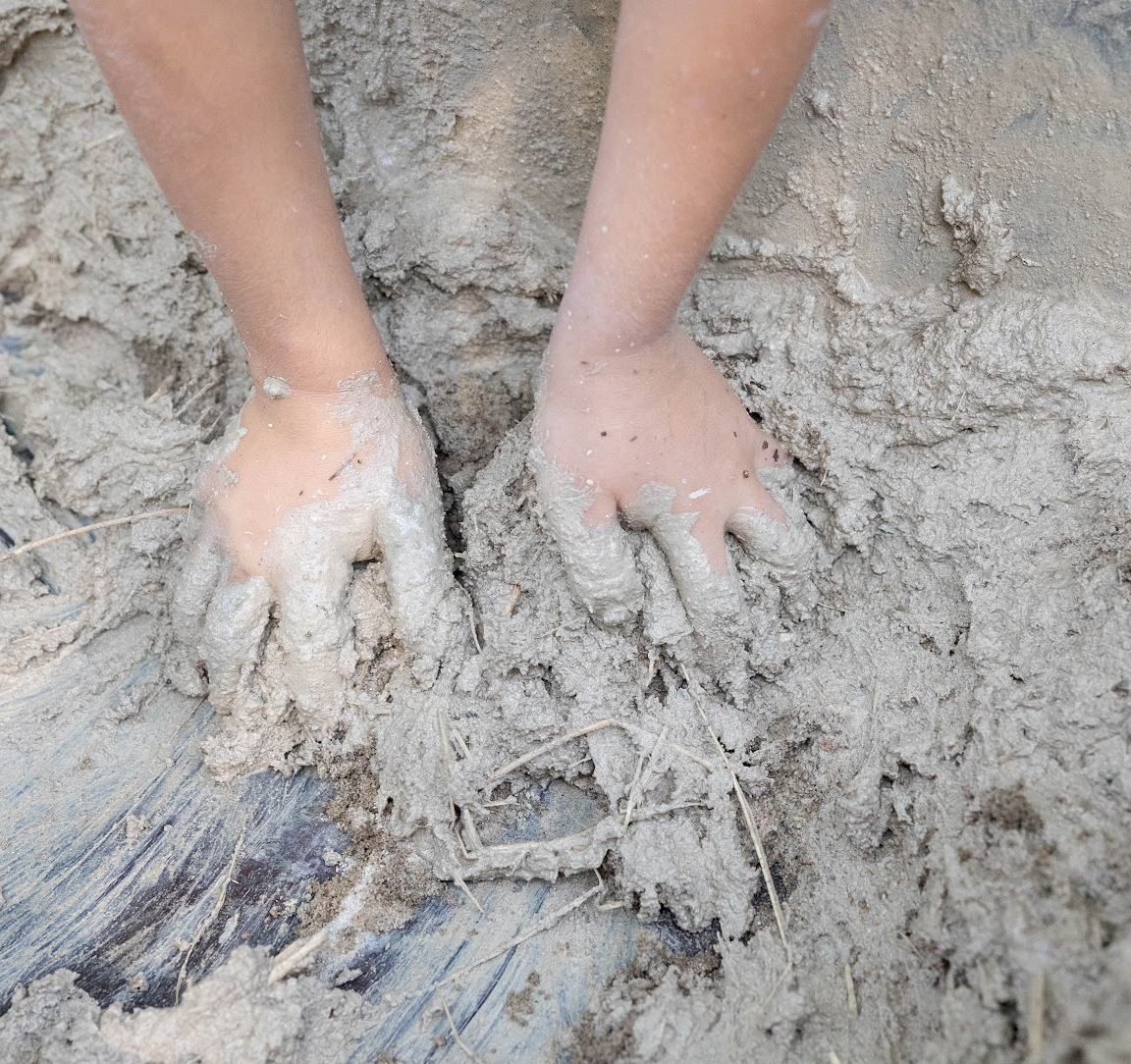
Find something safe to touch, such as bark, a leaf, grass, soil, or a smooth stone.
Ask:
“How would you describe the texture?”
Something You Can Smell
Smell a flower, an herb, fresh dirt, leaves, or rain-soaked ground.
Ask:
“What does this smell remind you of?”
Something That Makes You Wonder
This is the most important one.
It might be a bug trail, a curled leaf, a feather, a seed pod, or a hole in the ground.
Ask:
“What question does this make you want to ask?”
Turning Screen Energy into Explorer Energy
Children who love screens are often drawn to challenge, color, movement, and reward. Nature has all of those things — but in a slower, deeper form.
The goal is not to force children to instantly love being outside. The goal is to help them experience nature as interesting, alive, and worth noticing.
A child who begins by saying, “I’m bored,” may soon be following ants, collecting leaves, comparing rocks, or asking why one flower has more bees than another.
That moment matters.
Parent Tip: Don’t Overteach
You do not need to have all the answers.
If your child asks, “What kind of bug is this?” or “Why does that leaf have spots?” it is perfectly okay to say:
“I’m not sure. Let’s observe it together.”
This keeps the focus on curiosity instead of perfection. It also shows children that learning is something families can do side by side.
Easy Extension Ideas
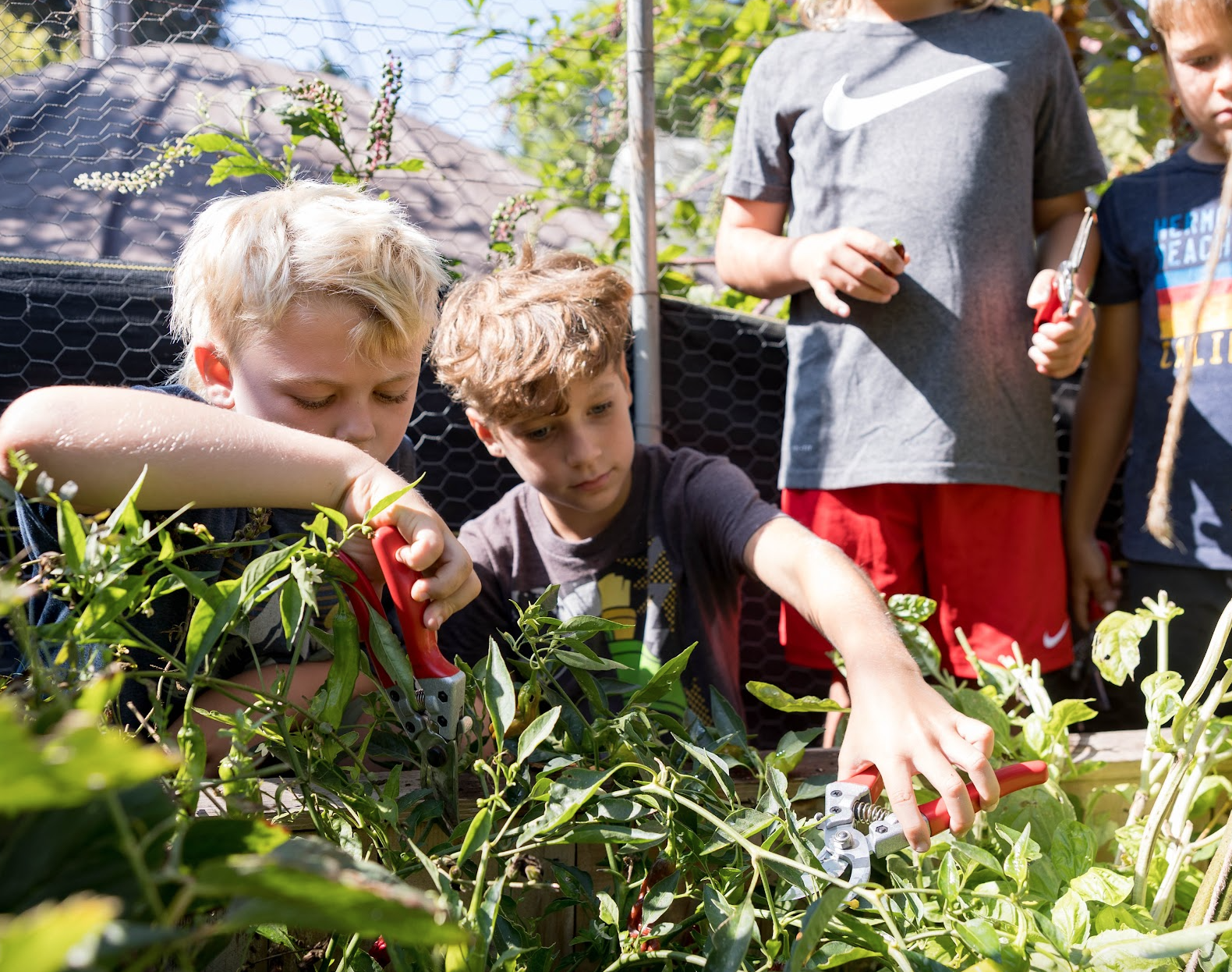
After the scavenger hunt, invite your child to choose one discovery and explore it a little more.
They can:
Draw it in a nature journal
Make up a story about it
Compare it to another object nearby
Take a closer look with a magnifying glass
Visit the same spot tomorrow and see what changed
These small follow-up moments help children build observation skills and deepen their connection with the natural world.
Invitation Back Outside
For children who spend a lot of time on screens, nature may feel quiet at first. But quiet does not mean empty.
Nature is full of movement, color, sound, texture, and surprise. It simply asks children to notice in a new way.
With patience, warmth, and playful invitations, outdoor time can become less of a battle and more of a shared adventure.
The next time your child reaches for a screen, try stepping outside together for just a few minutes. Bring a basket, open your senses, and see what the living world is waiting to show you.
