

In today's world, childhood often happens indoors.
Between schoolwork, extracurricular activities, and digital entertainment, many children spend more time looking at screens than looking at trees. While technology certainly has its place, research continues to show that regular time outdoors offers something children simply can't get from a device.
Nature isn't just a beautiful place to play—it supports healthy development in ways scientists are still discovering.
At The Web of Life, we've always believed that curiosity grows best outside. The exciting part is that research is increasingly showing why.
Nature Helps Children Focus
Have you ever noticed your child seems calmer after spending time outside?
Researchers have spent decades studying this phenomenon. One of the leading ideas is called Attention Restoration Theory, which suggests that natural environments give our brains a chance to recover from the mental effort required to focus throughout the day.
Unlike screens or busy classrooms, nature captures attention gently. Watching butterflies flutter, leaves move in the wind, or clouds drift across the sky engages the brain without overwhelming it.
Several reviews and experimental studies have found that spending time in green spaces can improve attention and aspects of executive function, such as working memory and self-control, particularly when children have repeated opportunities to be outdoors rather than just one-time experiences.
Outdoor Play Supports Healthy Brain Development
Children learn best by doing.
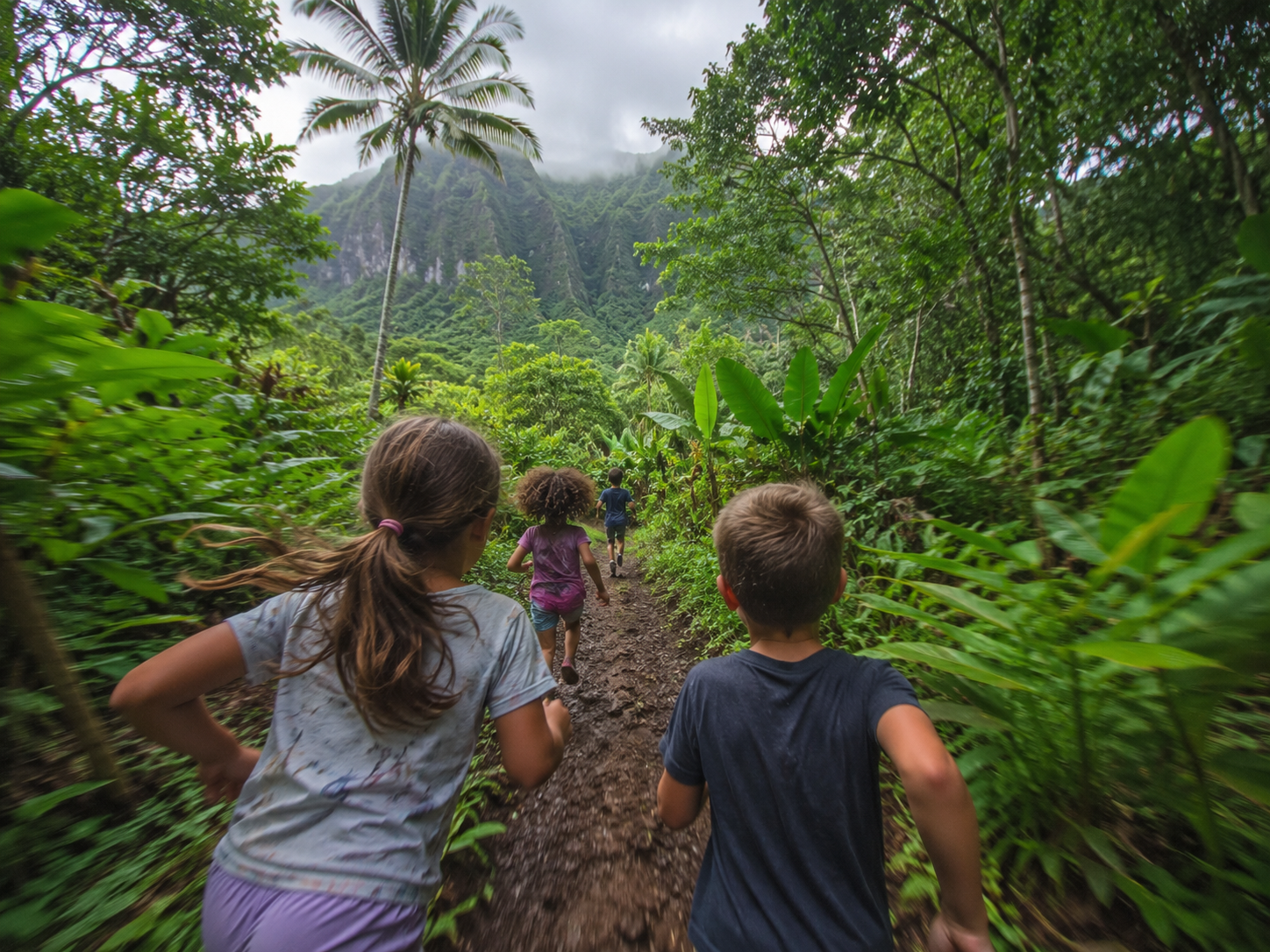
When they climb over logs, balance on rocks, build forts, dig in the soil, or carefully observe insects, they're using multiple parts of the brain at once.
Outdoor play encourages children to:
Solve problems
Make decisions
Practice planning
Strengthen memory
Develop coordination
Learn through trial and error
These experiences help build executive function—the set of mental skills children use to focus, remember instructions, manage emotions, and adapt when plans change.
Nature Encourages Movement
One of the clearest findings in research is that children are generally more physically active when they have access to safe outdoor spaces.
Running, climbing, hiking, digging, balancing, carrying sticks, and exploring uneven ground naturally encourage movement without it feeling like exercise.
Regular physical activity supports healthy muscles and bones, cardiovascular health, sleep, and overall well-being. Nature simply gives children an inviting place to move their bodies in meaningful ways.
Time Outside Supports Emotional Well-Being
While no single activity guarantees happiness, many studies have found that spending time in natural environments is associated with lower stress and improved mood.
Children often describe outdoor play as peaceful, exciting, adventurous, and calming all at the same time.
Natural settings also encourage imaginative play, cooperation, and opportunities to build confidence through independent exploration.
Even relatively short periods in green spaces may help children feel mentally refreshed.
Nature Sparks Curiosity
Perhaps one of the greatest gifts nature offers is something that can't easily be measured.
Wonder.
A child who notices an ant carrying a leaf, watches a spider build its web, or discovers a seed beginning to sprout is learning to ask questions.
Why?
How?
What happens next?
Curiosity is the beginning of lifelong learning.
Nature gives children endless opportunities to observe, investigate, compare, predict, and discover—skills that form the foundation of scientific thinking.
A Hands-On Family Activity: The Wonder Walk Challenge
Helping children spend more time outdoors doesn't have to involve a big adventure.
Try this simple activity together.
You'll Need
A notebook or nature journal
A pencil or crayons
A reusable bag for collecting fallen natural treasures (only where appropriate)
Step 1: Slow Down
Choose a nearby park, trail, backyard, or neighborhood walk.
Instead of focusing on distance, focus on noticing.
Step 2: Find Five Wonders
Invite your child to discover:
Something that moves
Something that smells interesting
Something with an unusual texture
Something smaller than their thumb
Something they've never noticed before
Step 3: Ask Open-Ended Questions
Instead of giving answers, try asking:
What do you notice?
Why do you think that happens?
What do you wonder?
What do you think might happen next?
These questions encourage observation and critical thinking without turning the walk into a quiz.
Step 4: Keep a Wonder Journal
When you get home, draw one favorite discovery and write down one new question.
Return to the same location each week and notice what changes with the seasons.
Five Simple Ways to Help Kids Spend More Time Outside
Building an outdoor habit doesn't require hours every day. Small, consistent moments can make a meaningful difference.
Create a daily "nature break," even if it's just 15–20 minutes.
Let children lead the adventure by choosing where to explore.
Keep simple outdoor tools handy, like a magnifying glass, bug viewer, or nature journal.
Visit the same outdoor space regularly so children can observe seasonal changes.
Focus on exploration instead of entertainment—nature doesn't need to compete with screens; it offers a different kind of experience built on curiosity and discovery.
Growing Healthy, Curious Children
The science is becoming increasingly clear: spending time in nature supports many aspects of children's development, including attention, physical activity, emotional well-being, and opportunities for learning.
While researchers continue to study exactly how these benefits work, one message remains remarkably consistent.
Children need opportunities to connect with the living world.
Every stick becomes a building tool.
Every puddle becomes an experiment.
Every bird call becomes a mystery waiting to be solved.
At The Web of Life, we believe some of the most important lessons don't begin with a worksheet—they begin with muddy boots, curious questions, and families exploring the outdoors together.
Research Highlights
This article is informed by peer-reviewed research and systematic reviews, including:
A 2021 systematic review in Pediatrics concluded that current evidence supports a positive relationship between children's contact with nature and improvements in physical activity and mental health.
A 2021 review in the Annual Review of Public Health found evidence linking nature exposure with improved cognitive function, mental health, sleep, physical activity, and cardiovascular health.
A 2024 meta-analysis found small but meaningful positive effects of nature exposure on children's attention and executive functioning, especially in experimental studies.
Multiple studies examining outdoor learning environments have found that green spaces can support attention restoration and reduce mental fatigue compared with indoor settings.
