
Hands-On Nature Activities for Kids That Teach Science, Art, and Observation

You do not need a perfect homeschool plan, expensive supplies, or a full afternoon to create meaningful learning outdoors.
Sometimes the most powerful lessons begin with one leaf, one cloud, one bug, one shadow, or one quiet moment under the sky.
Nature has a gentle way of helping children slow down, ask questions, create, observe, and wonder. And for moms, it offers something beautiful too: a simpler way to teach science, art, and observation without making learning feel heavy or forced.
At The Web of Life, we believe nature is one of the richest classrooms children can enter. It awakens curiosity, builds connection, and allows children to learn through touch, sound, smell, sight, movement, creativity, and reflection.
Nature-based learning is not just about naming plants or memorizing science terms. It is about helping children experience the living world with attention and care.
It is about asking:
What do you notice?
What do you wonder?
What changed?
How could we remember this?
How could we create from what we see?
You do not need to know the name of every bird, tree, flower, cloud, or insect before you begin.
Your child does not need you to be an expert.
They need you to be willing to notice with them.
Explore The Web of Life Curriculum
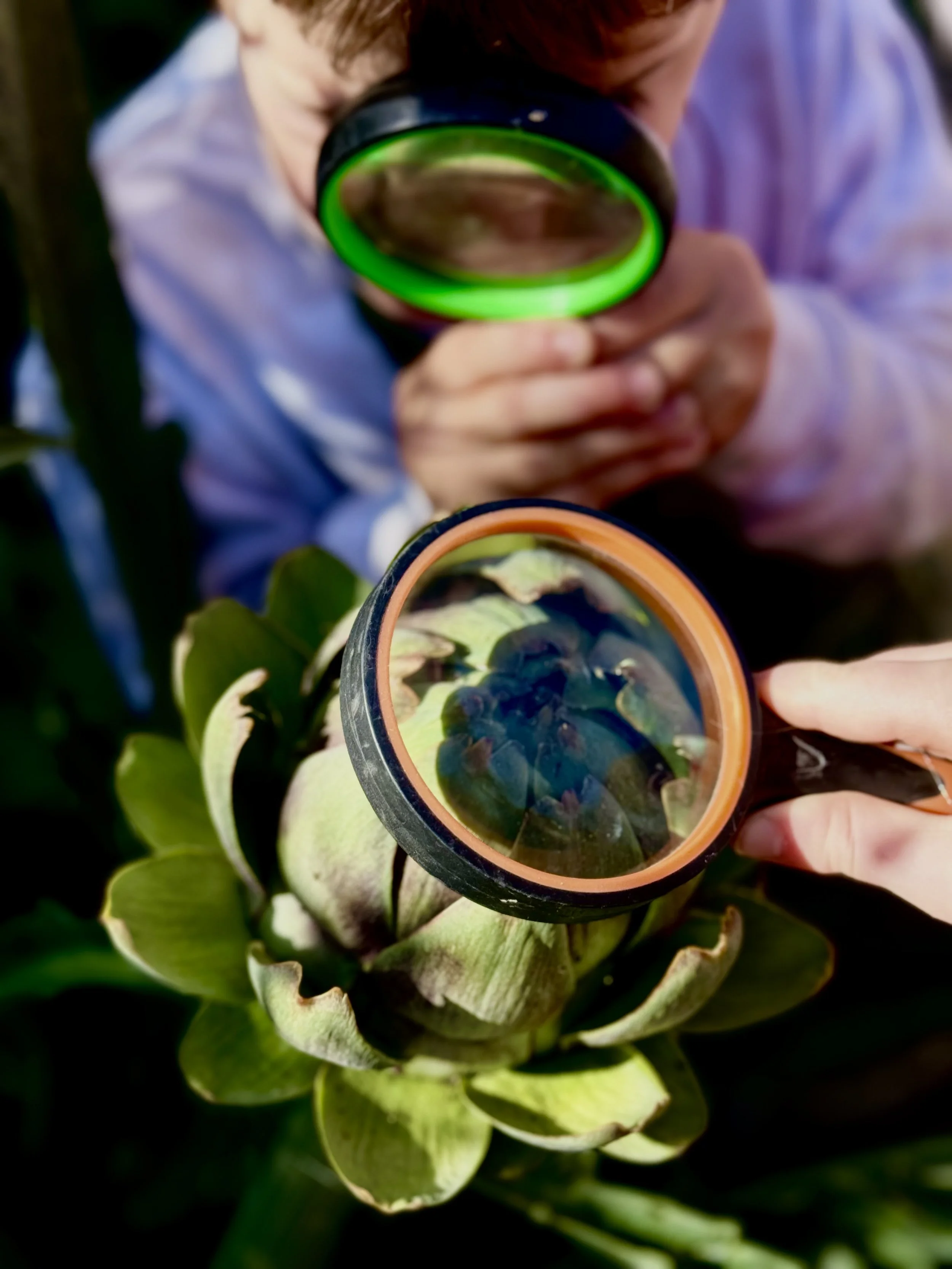
Why Nature-Based Activities Work
Children learn deeply when they are actively engaged. Nature gives them real things to touch, observe, compare, question, draw, sort, build, and study.
Through hands-on nature activities, children build:
Scientific Awareness: Children observe ecosystems, weather, plant life, insects, animals, shadows, soil, water, and seasonal change.
Artistic Expression: Children use natural materials, colors, textures, patterns, and landscapes as inspiration for drawing, painting, building, and storytelling.
Critical Thinking: Children ask questions, compare patterns, make predictions, test ideas, and record what they notice.
Observation Skills: Children learn to slow down and pay attention to details they might usually rush past.
Emotional Connection: Time in nature helps children feel present, peaceful, curious, and connected to the world around them.
When science and art meet in nature, learning becomes more than a lesson.
It becomes an experience.
Hands-On Nature Activities to Try
1. Nature Journaling with Scientific Prompts
Take a notebook outdoors and invite your child to observe one thing closely: a leaf, bird, bug, rock, flower, cloud, seed pod, or patch of soil.
Encourage them to sketch, label, and answer simple questions:
What do you notice?
What colors, shapes, or textures do you see?
How does it move or change?
What role might it play in nature?
What it teaches: Observation, scientific thinking, drawing, labeling, and reflection.
Mom-friendly tip: Do not worry about perfect drawings. A nature journal is not an art contest. It is a place to notice and remember.
Simple extension: Return to the same object or place later in the week and ask, “What changed?”
2. Leaf Art and Classification
Gather leaves of different shapes, sizes, colors, and textures. Use them for crayon rubbings, paint prints, patterns, or mandalas.
Then sort the leaves by:
Size
Shape
Color
Texture
Smooth or jagged edges
Similar or different trees
Add labels to turn the artwork into a simple mini field guide.
What it teaches: Classification, plant observation, pattern recognition, art, and early botany.
Ask your child:
“How are these leaves alike?”
“How are they different?”
Simple extension: Choose one leaf and draw it carefully in a nature journal.
3. Build a Bug Hotel
Use sticks, pinecones, dry leaves, bark, hollow stems, straw, and recycled materials to create a small shelter for insects. Place it in a quiet outdoor corner and observe it over time.
Check weekly and notice whether any insects visit, hide, or explore nearby.
What it teaches: Habitats, ecology, engineering, patience, and stewardship.
Ask your child:
“What would a tiny insect need to feel safe here?”
Mom-friendly tip: Remind children not to disturb insects once they move in. Observation is part of caring.
Simple extension: Keep a bug hotel log with dates, weather, and what your child notices.
4. Watercolor Weather Sketches
Sit outside and observe the sky. Use watercolor paints, colored pencils, or crayons to capture the clouds, light, colors, or mood of the day.
Talk about what the sky looks like:
Are the clouds puffy, wispy, flat, dark, or layered?
Is the air still or windy?
Does the sky look like rain might come?
What it teaches: Weather observation, art, seasonal awareness, and atmosphere.
Ask your child:
“What kind of feeling does the sky have today?”
Simple extension: Paint the sky once a week and compare the pages over a month.
5. Seed Dispersal Experiments
Look for seeds such as dandelions, maple keys, burrs, seed pods, or fluffy windblown seeds.
Observe how they move.
Some seeds float.
Some spin.
Some stick to clothing or fur.
Some drop close to the parent plant.
Then invite your child to create a paper seed model and test how it travels in the wind.
What it teaches: Plant life cycles, seed dispersal, wind movement, experimentation, and design.
Ask your child:
“How does this seed travel to a new place?”
Simple extension: Sort seeds into groups: wind travelers, animal hitchhikers, droppers, or floaters.
6. Tracking Shadows with Chalk
On a sunny day, place a toy, stick, flowerpot, or your child’s body on pavement and trace the shadow with chalk.
Return every hour and trace it again.
Notice how the shadow changes:
Does it move?
Does it get longer or shorter?
Does it point in the same direction?
What it teaches: Sun movement, time, Earth’s rotation, observation, and measurement.
Ask your child:
“Why do you think the shadow moved?”
Mom-friendly explanation:
The sun appears to move across the sky during the day because the Earth is rotating. As the sun’s position changes, shadows change too.
Simple extension: Measure the shadow each time and record the lengths.
7. Create a Nature Color Wheel
Draw a simple color wheel or color chart on paper. Then go outside and search for natural items that match each color.
Look for:
Green moss or leaves
Yellow flowers
Brown bark
Gray stones
Red berries or leaves
Purple petals
White feathers or clouds
Arrange the items by color and take a photo.
What it teaches: Color theory, observation, sorting, nature appreciation, and art.
Ask your child:
“Which color was easiest to find? Which one was hardest?”
Gentle nature note: Use fallen items when possible. If picking flowers or leaves, only pick where it is allowed and take just a little.
Simple extension: Create a seasonal color wheel in spring, summer, fall, and winter. Compare how nature’s colors change.
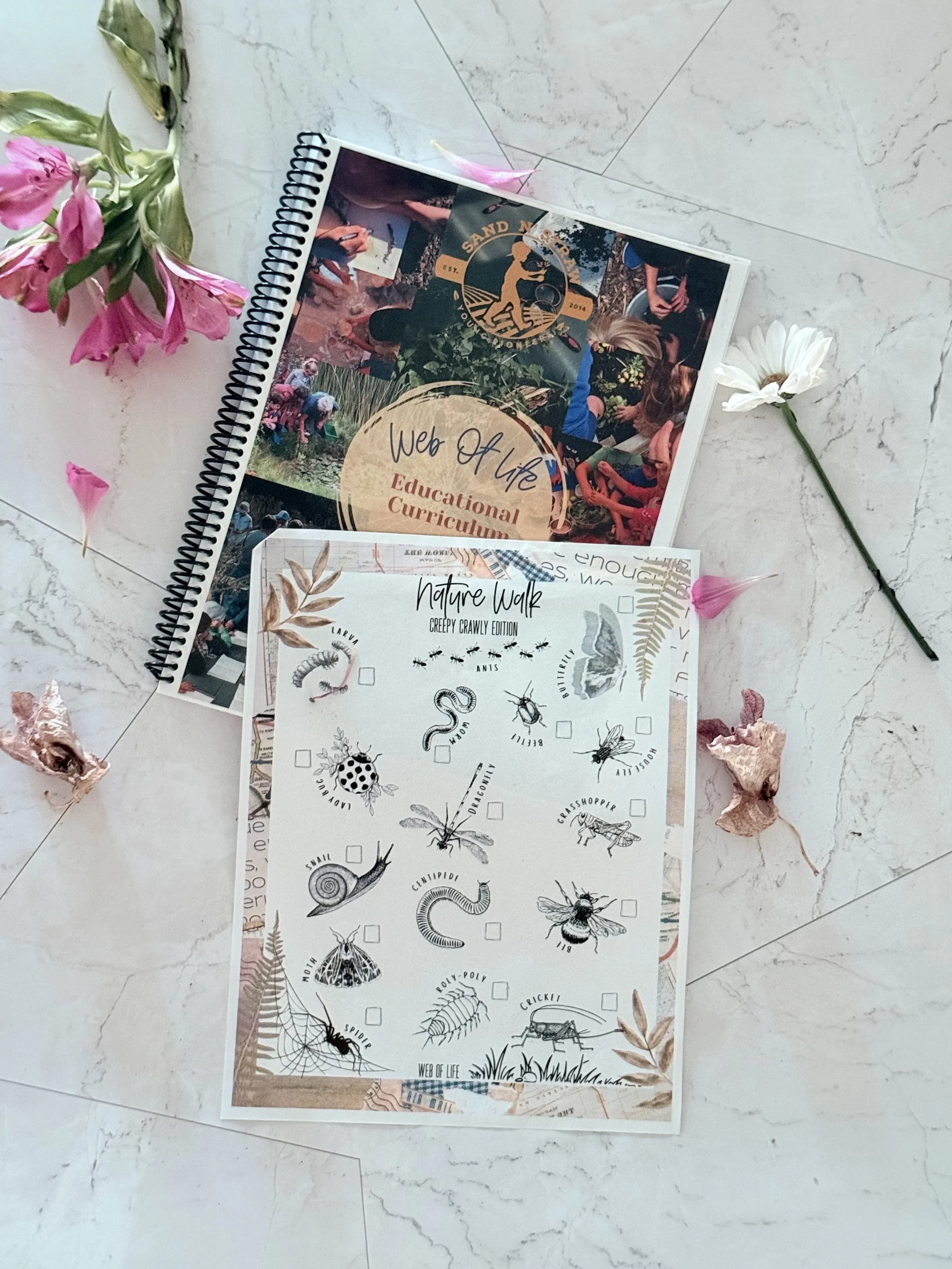
Learning Through the Seasons
Each season brings new invitations for learning.
You do not have to force a rigid plan. You can let nature help guide the rhythm.
Spring
Spring invites children to notice new growth, seedlings, flowers, pollinators, bird songs, mud, rain, and life cycles.
Try: seed starting, flower sketching, bird watching, insect observation, garden journaling.
Summer
Summer brings long light, warm soil, water play, garden growth, outdoor art, and field trips.
Try: water experiments, nature color wheels, creek walks, cloud painting, garden harvest observations.
Fall
Fall offers leaves, seeds, migration, harvest, cooler air, decomposition, and cozy nature walks.
Try: leaf classification, seed collecting, pumpkin studies, migration maps, compost observation.
Winter
Winter may feel quiet, but it still holds wonder: frost, bare branches, animal tracks, evergreens, weather patterns, and indoor nature journaling.
Try: weather sketches, bird feeder observation, bark rubbings, winter sky journaling, kitchen science.
Even one nature day each week can create a meaningful rhythm over time.
Encouraging Scientific Thinking and Artistic Expression
You do not have to turn every outdoor moment into a formal lesson.
Instead, ask simple, open-ended questions:
What do you notice?
What do you think will happen next?
How could we test that?
What changed since last time?
What does this remind you of?
Then give space for creativity:
Can you draw what you see?
Can you build that pattern with sticks or stones?
Can you paint the colors of the sky?
Can you tell a story about this tiny place?
When children are free to observe and create, learning becomes more personal. They begin to see science and art not as separate subjects, but as two ways of paying attention.
Parent Guidance by Age
Ages 5–6: Touch, Notice, and Wonder
At this age, keep activities simple and sensory. Children learn through touching safe textures, naming colors, listening, smelling, drawing, and moving.
Best activities for this age:
Nature journaling
Leaf rubbings
Nature color wheel
Watercolor weather sketches
Simple shadow tracing
Ask: “What do you see, hear, smell, or feel?”
You can say: “Scientists and artists both notice carefully.”
Ask: “What is your favorite thing we found today?”
You can say: “When we choose a favorite, we are practicing observation and memory.”
At-home extension: Invite your child to draw one thing they noticed outside.
Ages 7–8: Compare, Sort, and Ask Why
Children this age are ready to compare, classify, and begin asking cause-and-effect questions.
Best activities for this age:
Leaf classification
Bug hotel observations
Seed dispersal experiments
Shadow tracking
Nature journaling with labels
Ask: “How are these two things alike and different?”
You can say: “Comparing helps us notice patterns.”
Ask: “Why do you think this seed, bug, leaf, or shadow behaves this way?”
You can say: “A good scientific guess is based on what we observe.”
At-home extension: Create a simple chart with three columns: I noticed, I wonder, I think.
Ages 9–10: Think in Connections
Older children can begin connecting nature study to ecosystems, design, weather, seasonal change, habitats, and stewardship.
Best activities for this age:
Bug hotel tracking
Seed dispersal experiments
Weather sketch series
Shadow measurement
Seasonal nature journals
Ask: “How does this living thing connect to the rest of its habitat?”
You can say: “Living things depend on food, water, shelter, space, and relationships with other parts of nature.”
Ask: “How can art help us understand science?”
You can say: “When we draw, paint, or build what we see, we slow down and notice details more carefully.”
At-home extension: Have your child choose one nature activity and turn it into a mini project with drawings, labels, notes, and one question they want to keep exploring.
Nature Is the Curriculum
Nature is not just a place to take a break from learning.
Nature is full of learning.
The garden teaches life cycles.
The sky teaches weather.
The soil teaches decomposition.
The birds teach observation.
The shadows teach time.
The leaves teach classification.
The seasons teach change.
You do not need expensive kits or a shelf full of textbooks to begin.
You need curiosity, time outdoors, and a few gentle tools to help your child slow down and see.
Want More Nature-Inspired Lessons?
This guide is a simple place to begin. And if you want seasonal, hands-on lessons already planned for you, The Web of Life Curriculum can help you bring nature, science, art, kitchen learning, homesteading, Christian reflection, and outdoor discovery into your homeschool rhythm.
Each lesson gives your family a gentle path to follow so you are not scrambling for ideas or wondering how to explain the learning.
You do not need to be a science expert.
You do not need to be an artist.
You do not need a perfect outdoor space.
You just need a curious child, a little time outside, and a gentle guide.