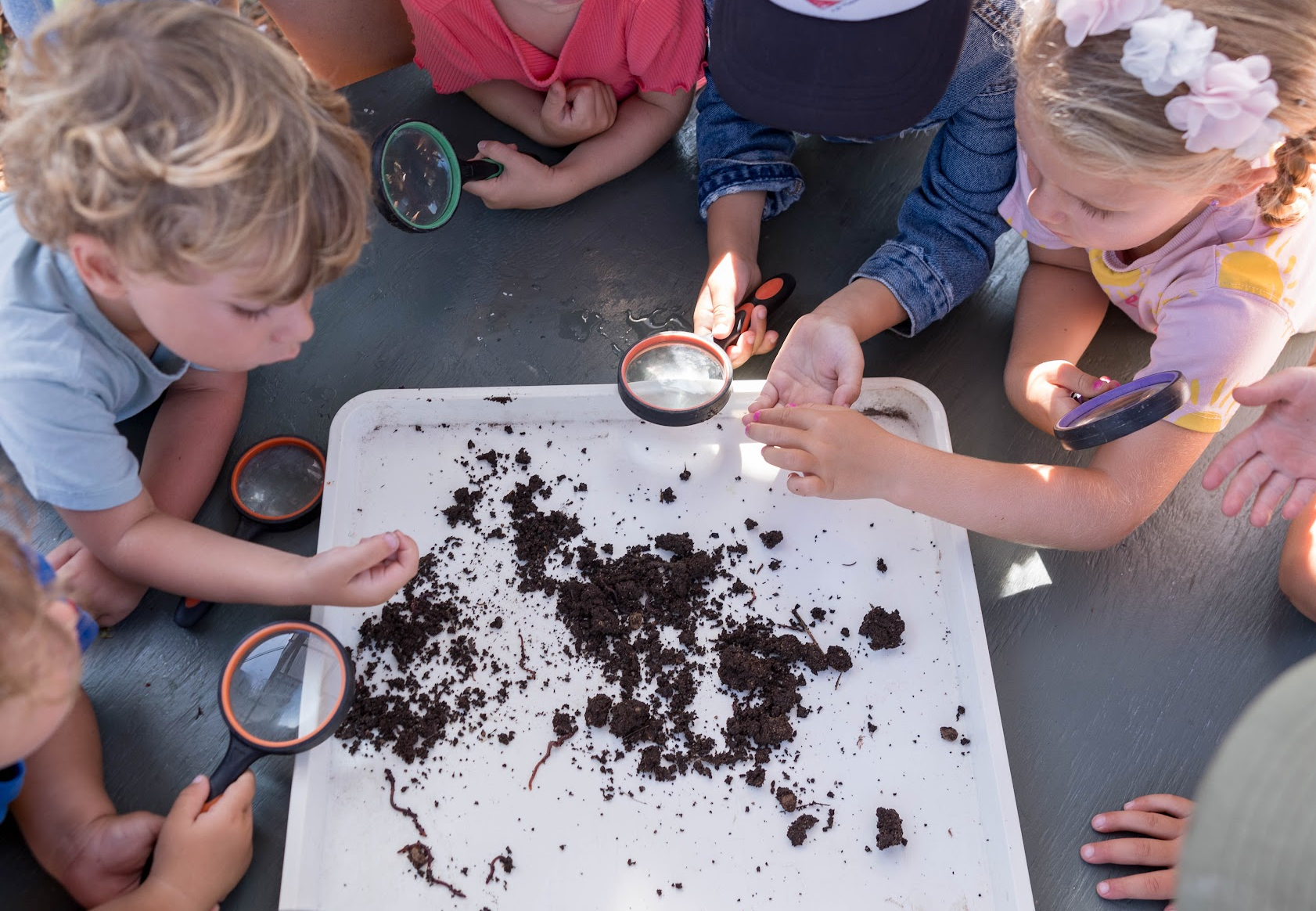
Children do not need a complicated lesson to begin learning from nature. Sometimes all they need is a leaf in their hand, a bird call overhead, a trail of ants near the sidewalk, or five quiet minutes under the sky.
Nature has a gentle way of waking up curiosity. It invites children to notice, compare, ask questions, create, listen, wonder, and care.
Whether you are homeschooling, teaching in a classroom, or simply looking for screen-free family time, these 15 nature activities will help children slow down and connect with the living world around them.
This list is a small glimpse into the kind of hands-on, nature-based learning families experience inside The Web of Life Curriculum — simple, seasonal lessons that bring science, art, outdoor exploration, and real-life discovery together.
Explore The Web of Life Curriculum
How to Use These Nature Activities
You do not need to do all 15 activities at once. Choose one that fits your child, your weather, your energy, and your outdoor space.
A backyard, park, sidewalk, trail, garden, porch, or schoolyard can all become places of discovery. The goal is not to complete a perfect lesson. The goal is to notice together.
1. Nature Scavenger Hunt
Create a simple list of things for children to find outdoors, such as a feather, a round rock, a heart-shaped leaf, something soft, something rough, or something that smells earthy.
Learning focus: Observation, sensory awareness, classification
Ask: “Which item was easiest to find? Which one made you look more closely?”
2. Leaf Rubbing and Classification
Collect a variety of leaves, place them under paper, and rub over them with crayons. Then sort the leaves by shape, size, color, edge pattern, or tree type.
You can gently introduce words like deciduous and evergreen if they fit what you find.
Learning focus: Plant observation, sorting, vocabulary
Ask: “How are these leaves alike? How are they different?”
3. Insect Observation Station
Use a magnifying glass or clear bug container to observe insects in their habitat. Watch how they move, where they hide, what they climb on, and how they respond to the world around them.
Remind children to be gentle and return insects safely to where they were found.
Learning focus: Animal behavior, habitats, careful observation
Ask: “What does this insect need in order to live here?”
4. Cloud Watching and Weather Journaling
Lie on a blanket and watch the clouds drift by. Sketch what you see in a nature journal and notice whether the clouds look fluffy, flat, wispy, dark, or layered.
You can introduce simple cloud words like cumulus for puffy clouds or stratus for flat, layered clouds.
Learning focus: Weather observation, journaling, pattern recognition
Ask: “What do today’s clouds tell us about the weather?”
5. Sound Mapping
Sit quietly outside with a piece of paper. Draw a circle in the center to represent yourself. Each time you hear a sound, mark it on the paper in the direction it came from.
Sounds might include birds, wind, insects, footsteps, cars, water, dogs, or leaves.
Learning focus: Listening, mindfulness, spatial awareness
Ask: “Which sounds came from nature? Which sounds came from people?”
6. Rock Sorting and Storytelling
Collect a few rocks and sort them by size, color, texture, weight, or shape. Then invite your child to choose one rock and imagine its journey.
Did it come from a mountain, a river, a garden path, or somewhere far away?
Learning focus: Geology, classification, creative storytelling
Ask: “What clues does this rock give us about where it might have been?”
7. Nature Art with Found Objects
Use leaves, sticks, stones, petals, and seed pods to create mandalas, animals, patterns, or abstract art. Talk about symmetry, repetition, balance, and texture.
Use fallen items when possible and return natural materials gently after creating.
Learning focus: Art, design, nature connection
Ask: “Where do you see patterns in your artwork?”
8. Seed Dispersal Experiment
Observe natural seeds such as dandelions, maple seeds, burrs, or seed pods. Talk about how seeds travel by wind, water, animals, or gravity.
You can also create simple paper seed models and test how they fall or float.
Learning focus: Plant life cycles, movement, experimentation
Ask: “How does this seed travel to a new place?”
9. Build a Bug Hotel
Use recycled materials, sticks, pinecones, dry leaves, bark, and hollow stems to create a small insect shelter. Place it in a quiet outdoor area and observe over time.
Avoid disturbing insects once they begin using the space.
Learning focus: Habitats, stewardship, insect life
Ask: “What kind of insect might like to live here, and why?”
10. Tree Bark Texture Hunt
Place paper over tree bark and rub with a crayon to capture the texture. Compare different trees and notice whether the bark is smooth, rough, flaky, ridged, or patterned.
Learning focus: Tree identification, texture, comparison
Ask: “How does bark help protect a tree?”
11. Make a Nature Bracelet
Wrap tape loosely around a child’s wrist with the sticky side facing out. As they walk, they can add tiny fallen treasures like petals, small leaves, or bits of grass.
Keep it gentle and avoid picking from protected plants.
Learning focus: Sensory exploration, color, texture
Ask: “What tiny things did you notice that you might usually walk past?”
12. Nature Sit Spot
Choose one quiet outdoor place and return to it regularly. Sit for a few minutes and notice what changes over time: sounds, shadows, birds, insects, weather, smells, and plant growth.
Learning focus: Mindfulness, seasonal change, observation over time
Ask: “What is different today from the last time we sat here?”
13. Build Mini Fairy or Critter Houses
Use bark, moss, twigs, stones, leaves, and other fallen items to create tiny homes for imaginary woodland creatures or garden critters.
Invite children to tell a story about who lives there and what they need.
Learning focus: Imaginative play, habitats, storytelling
Ask: “What would a tiny creature need to feel safe here?”
14. Bird Watching and Sound Identification
Observe birds in your area. Notice their colors, size, beak shapes, movement, and songs. You can keep a list of the birds you see or hear.
Bird identification apps can help, but quiet watching is enough.
Learning focus: Animal observation, sound identification, local ecology
Ask: “What do you notice about this bird’s beak, feet, or movement?”
15. Decomposition Study
Create a small compost observation jar or outdoor compost spot with organic materials such as leaves, fruit peels, and small plant scraps. Watch how they change over time.
Talk about how decomposition helps return nutrients to the soil.
Learning focus: Soil science, ecosystems, nutrient cycling
Ask: “What happens to leaves and food scraps when they break down?”
Featured Activity to Try Today: Sound Mapping
Sound mapping is one of the simplest ways to help children slow down and listen deeply. It builds mindfulness, attention, spatial awareness, and connection to place.
Materials Needed
Paper
Pencil or crayons
A quiet outdoor space
Instructions
Draw a circle in the center of the paper to represent yourself.
Sit quietly and listen for five minutes.
Each time you hear a sound, mark a symbol, word, or picture around the circle to show where the sound came from.
Use colors or shapes to represent different types of sounds, such as birds, wind, insects, footsteps, cars, or voices.
Extend the Learning
Repeat the activity at different times of day or in different locations. Compare how the soundscape changes.
Ask:
“What sounds do we hear in the morning?”
“What sounds do we hear in the afternoon?”
“How does weather change what we hear?”
“Which sounds tell us animals are nearby?”
Inside The Web of Life Curriculum, families receive guided activities like this with parent-friendly explanations, discussion questions, and simple ways to deepen the learning.